

The foundation of cancer prevention is plants, not pills.
“The vast majority of cancer research is devoted to finding cures, rather than finding new ways to prevent disease. The results of these skewed priorities are plain to see.” It’s been nearly 55 years since President Richard Nixon declared war on cancer, yet deaths from the most common cancers in the United States have continued unabated.
“We have been looking at the very nature of cancer in the wrong way. Breast cancer doesn’t begin when a lump is first felt or detected by a mammogram. All the common epithelial cancers (lung, colorectal, breast, prostate, pancreas and ovary), which account for the majority of deaths, have a long latency period—often 20 years or more.” So, it’s not like you were healthy one day, then got cancer the next. You haven’t been healthy—you’ve had cancer growing in you for decades. Indeed, there’s a “bizarre misperception that people are ‘healthy’ until they have actual symptoms of invasive cancer,” but “the barn in which hay is smoldering before it bursts into flames is not a safe place.”
So, what does this professor of pharmacology I’ve been quoting recommend? Drugs, of course. Chemoprevention—putting people on drugs to prevent cancer. The pharmaceutical industry spends tons of money promoting chemoprevention of heart disease and strokes with statins and blood thinners, so why shouldn’t people take drugs every day for the rest of their lives to protect against cancer?
There has to be a better way.
What about using diet and nutrition to prevent and treat cancer? Well, what kind of cancer? There are more than 200 types. But here’s the key: They all share the same hallmarks. In a series of papers cited more than 40,000 times in the biomedical literature, 10 hallmarks of cancer have been identified:
- Increased sensitivity to growth factors
- Evading your body’s tumor suppressors
- Dodging your immune system
- Being able to grow forever
- Tumor-promoting inflammation
- The ability to invade and spread
- The ability to hook up its own blood supply
- The accumulation of DNA mutations
- Disarming the self-destruct mechanisms in place
- Hijacking the cell’s metabolism
And, of course, there are classes of drugs to try to counter each one—chemotherapy agents designed to target each piece of the cancer puzzle. You can see them below and at 2:27 in my video Fighting the Ten Hallmarks of Cancer with Food.
Now, ideally, there would be drugs able to target multiple hallmarks at one time, but that’s not how drugs tend to work. Indeed, “this need to target multiple hallmarks is one of the major reasons why, in the context of cancer research, there are many proponents of investigating plant foods as they can deliver a cocktail of bioactive compounds” that may target most, if not all, of the hallmarks of cancer. Below and at 3:00 in my video, you can see a sampling of compounds found in fruits and vegetables—such as berries, greens, and broccoli—shown to be able to target each of the 10 hallmarks of cancer, at least in a petri dish.
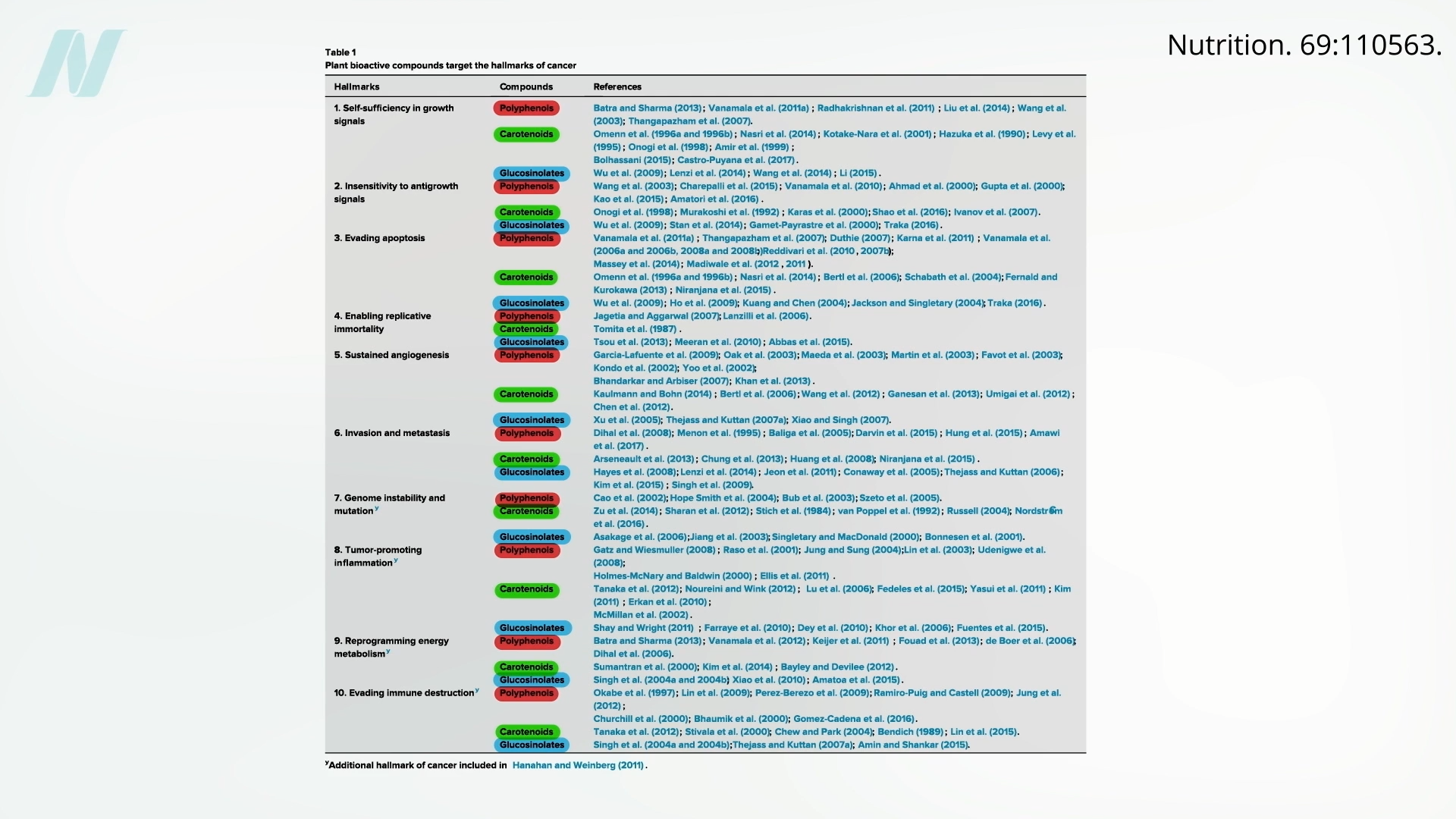
Furthermore, they have the qualities of an ideal chemopreventive agent. If you were to design the perfect candidate, you’d want them to be selective to cancerous or precancerous cells while leaving normal cells alone, be side-effect-free, target most types of cancers, be able to be consumed in a daily diet, be conveniently available almost everywhere, and be relatively inexpensive to boot. Plants meet all these criteria. No wonder people who eat more plant-based foods tend to have lower cancer rates.
To be clear, we aren’t talking about taking supplements containing extracts or purified phytochemicals, but rather eating whole plant foods themselves—more of a food system–based approach to targeting the hallmarks of cancer. Foods contain thousands of substances that result in vast numbers of possible interactions, yet much of nutritional science “has long been directed towards the impact of single dietary components.” Yes, this kind of reductionist approach can uncover the role of foods or even individual nutrients in disease development, but let’s think about what the optimal research strategy would be to study the effects of bioactive natural plant compounds on disease prevention. Instead of using isolated phytochemicals to manage cancer, why not try whole foods? Sometimes the whole can be greater than the sum of its parts, a concept known as food synergy.
Check out this study involving the simultaneous inhibition of a series of cancer stages in breast cancer cells using a phytochemical supercocktail. Two breast cancer cell lines were treated with six different plant compounds individually, and then all together, at levels typically found in the bloodstream after eating foods like broccoli, grapes, soybeans, and turmeric. And while the compounds were ineffective individually, together they significantly suppressed breast cancer cell proliferation by more than 80%, inhibited cancer cell invasion and migration, stopped the cancer cells in their tracks, and eventually killed them all off. The plant compounds did all this without having any deleterious effects on the normal noncancerous cells used as control.
No wonder the foundation of cancer prevention—based on an update of the most extensive report on diet and cancer ever published—is not pills, but plants, as you can see below and at 5:28 in my video.
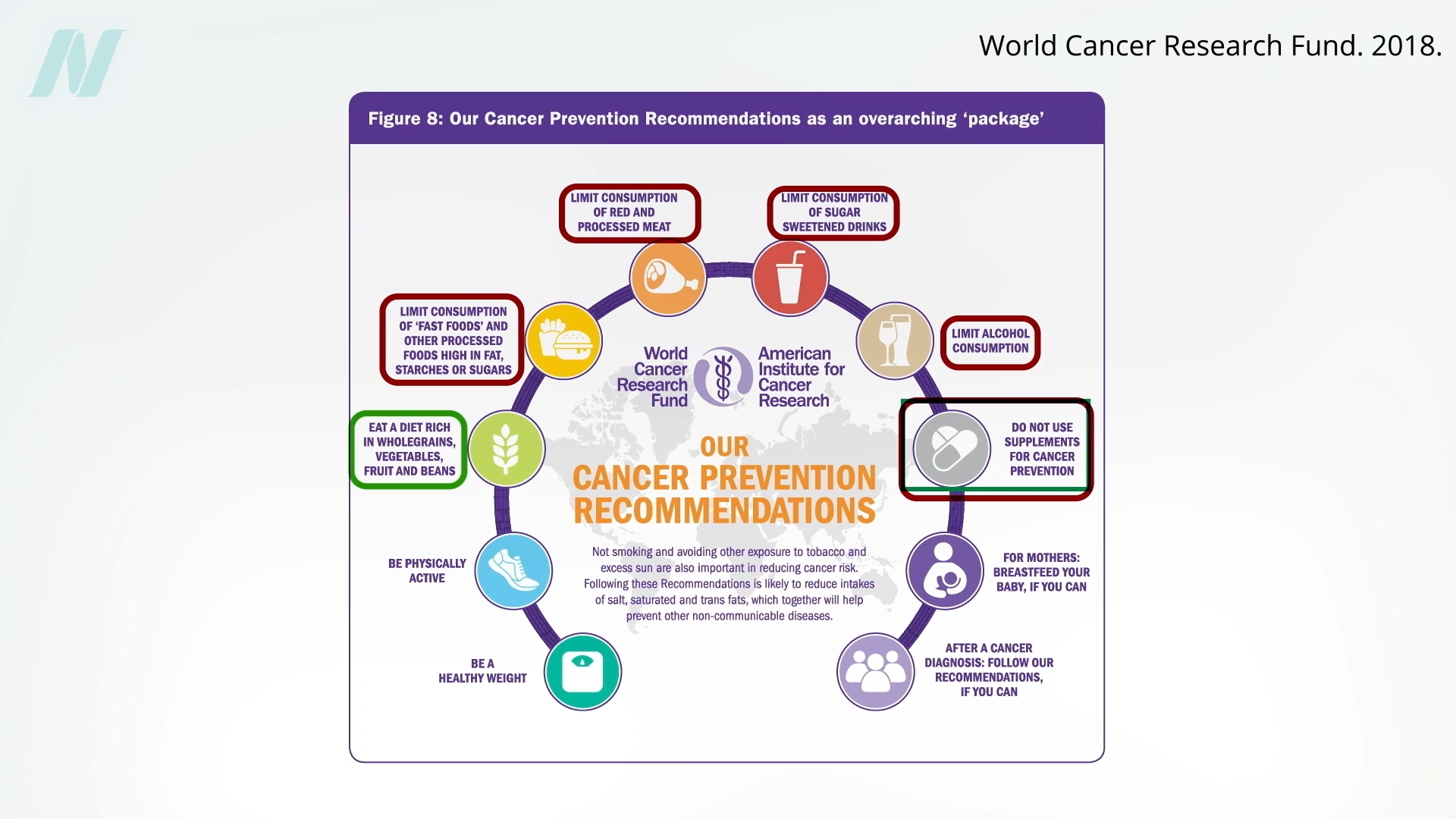
In other words, cut down on alcohol, soda, meat, and processed junk, and center your diet around whole grains, vegetables, fruits, and beans.
Doctor’s Note
I have dozens of videos on cancer prevention and treatment. Check the related posts below.


